



Blackdoor
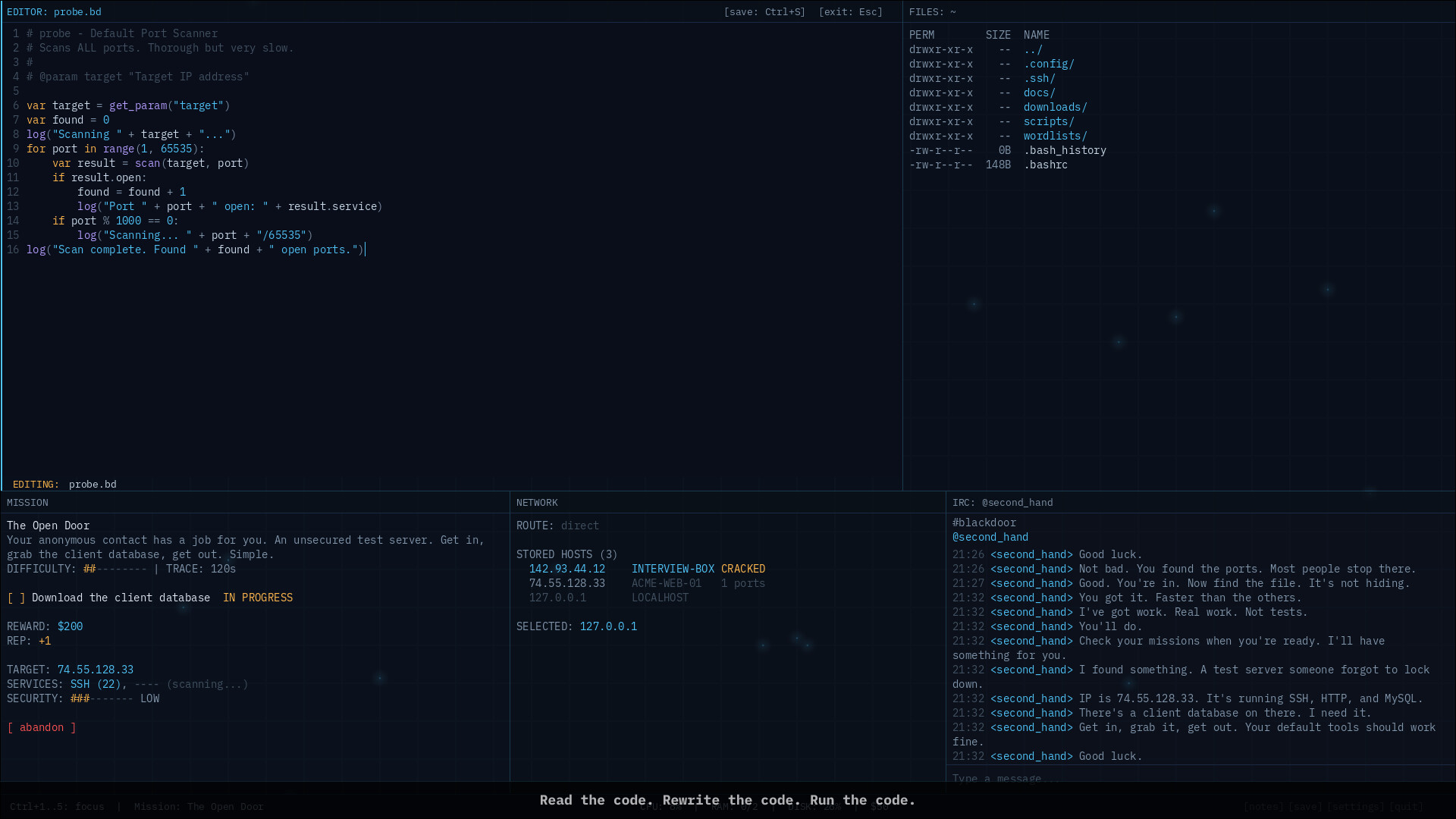
Blackdoor is promoted as for fans of Hacknet and Grey Hack and was released on the 6th of August 2026 through the digital platform Steam. It was developed and self-published by Static Signal, which has already released two other games this year, UPLOAD and File Hoard. As a disclaimer, I have not played Hacknet nor Grey Hack, and I am not a huge fan of hacking simulators from the get-go. That is why I will try to keep my review as objective and informational as possible.
In Blackdoor, you are a hacker with a terminal and four scripts that need to be rewritten. You will hack servers by writing actual programming code in a custom scripting language. Cracking passwords and stealing data is what you will be doing, and the better your code is, the better you will hack. In a pool of games that want to make you feel like a hacker, Blackdoor takes a different approach than the usual entering passwords, clicking through menus, and solving mini-games to hack something or someone. Here, you are actually programming via a terminal and a collection of mediocre tools, and are expected to experiment with writing better code than what you were given.
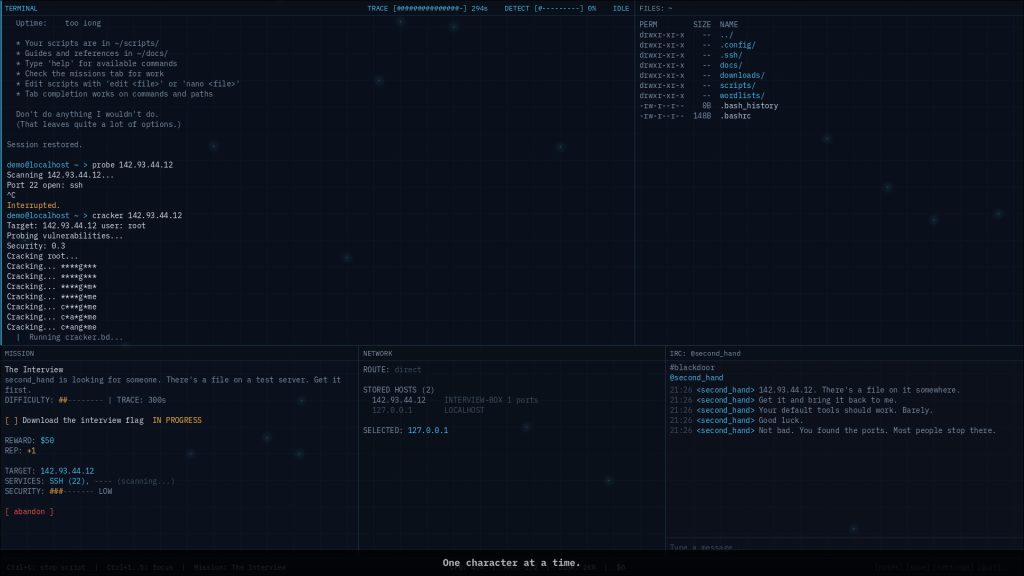
All of that results in an unusual game that can be quickly described as a mix between a hacking simulator, programming puzzler, and a text-based strategy title. Blackdoor is also going to frustrate you if you are like I am, with no prior knowledge about how hacking simulators work and should be played in the first place. The terminal actually is the game, and there are no sugar-coated graphics here – only the pure hacking aesthetic. The tools that you will start with are supposed to be terrible, as you will need to program something better than your usual brute force password crackers. Sure, brute force will definitely work in the end, but the time it will take to decipher the potential password will be very long.
You are not able to just buy better versions of the code as you progress through the game, but are intentionally encouraged to rewrite them. If you will not give up too quickly, Blackdoor will stimulate your brains and you will gradually become better at solving the problems the game will throw at you, and you will be appropriately rewarded for your curiosity and the time you will spend with it. Knowing the basics of computer programming will immensely help you with your gameplay, as the basic loop is to write a code, test it, discover the problem, rewrite it correctly, run it once more, and improve the result. If you are into logical problem-solving, this game will probably be right up your alley, but do not expect everything to go without problems if you already know how to program in one of the existing programming languages.
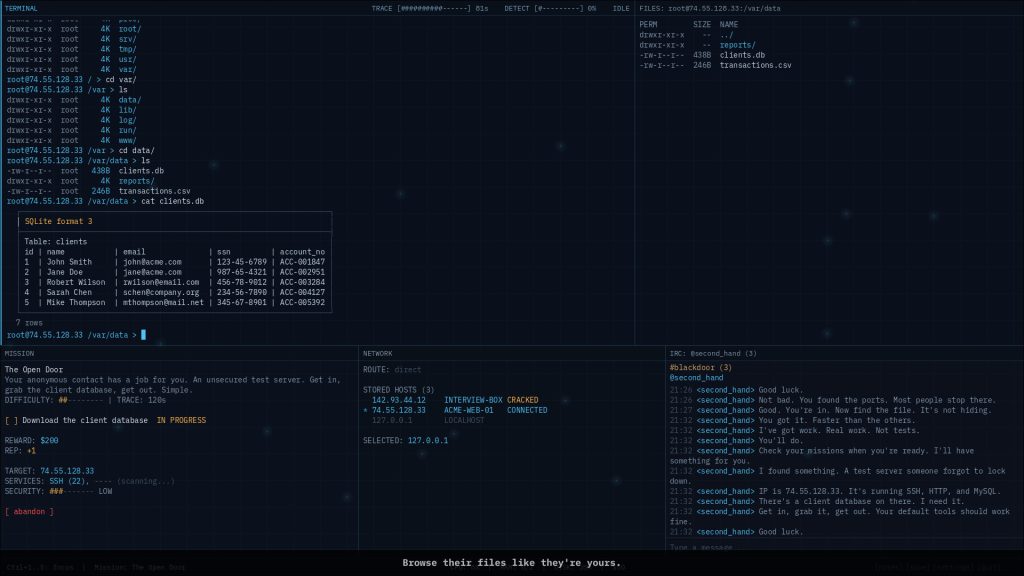
Being familiar with and understanding programming will definitely be an advantage in playing the game, as opposed to not having a single clue about how programming works. Blackdoor is not beginner-friendly at all and can result in being too intimidating to even try in the first place. But if you enjoy discovery and have no problems with wanting to learn something new, it can render in being exciting, but still difficult because you will need to understand what the game actually wants you to discover before you even try to start solving the problem that was given to you.
As already briefly mentioned, Blackdoor is a lightweight game when compared to modern PC standards. Your computer will probably not have any problems running it, as 2 GB of RAM and 200 MB of storage will suffice to sink into its terminal-centric presentation. It is also pretty cool that it features a save-anytime functionality, which is extremely welcome when you are experimenting with your code. I would recommend the game to everyone who enjoys programming, puzzle solving, hacking-themed titles, and logical experimentation. Others should probably steer far away from Blackdoor, especially if you are expecting a cyberpunk action experience from it.